
Businesses looking to automate core business processes typically look at two main software solutions, enterprise resource planning (ERP) and customer relationship management (CRM).Both serve as vital data repositories. Both also touch on multiple departments and, while they are sometimes built on the same platform, the software is often bought separately and integrated where needed.This article will help identify the key characteristics of both CRM and ERP, how they differ and whether a business needs ERP, CRM or both.
What is CRM?
In short, or customer relationship management is software that manages all the ways a customer interacts with a business. Initially, were first developed for sales departments and were sometimes known as sale force system.
What is ERP?
Enterprise resource planning (ERP) evolved out of meterial required, which was a way for manufacturers to understand and manage all the resources needed to operate a successful business.
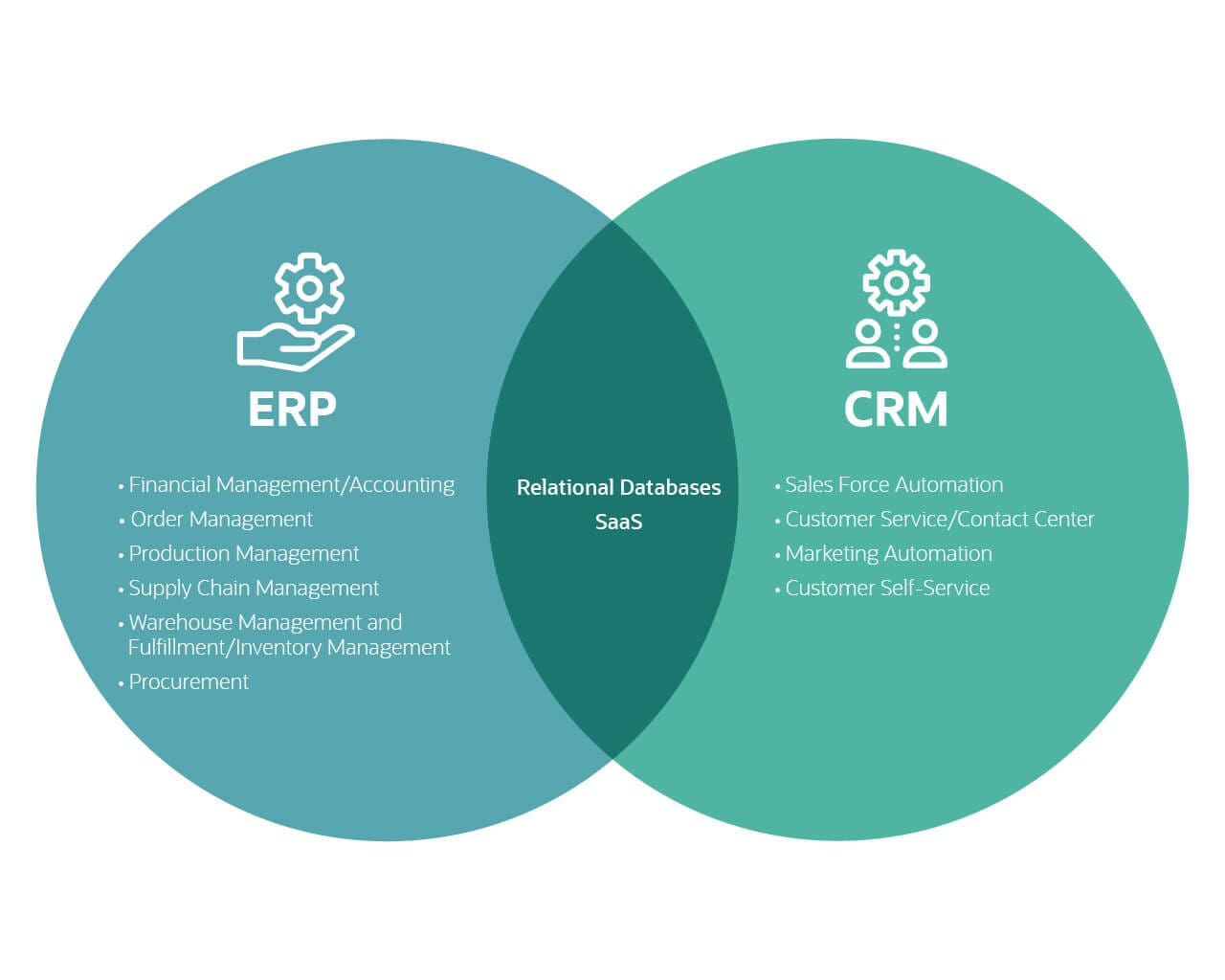
What is the Difference Between CRM and ERP?
While the entire organization will come to rely on both ERP and systems, the fundamental difference between ERP and is that ERP is primarily for financial data and the finance department, while is customer data used by the sales and customer service departments. The former is commonly referred to as the back office, and the latter is the front office.
ERP Benefits
The benefits of an ERP system come from having a single, shared database for all financial and operational data.
CRM Benefits
The central promise of CRM is to give the business a central repository of all customer data, tracking all customer interactions.
ERP Benefits
The benefits of an ERP system come from having a single, shared database for all financial and operational data. This greatly impacts reporting — both static monthly reports and ad hoc reports requested by leadership.
What is the Difference Between CRM and ERP?
The former is commonlyand the latter is the front office.