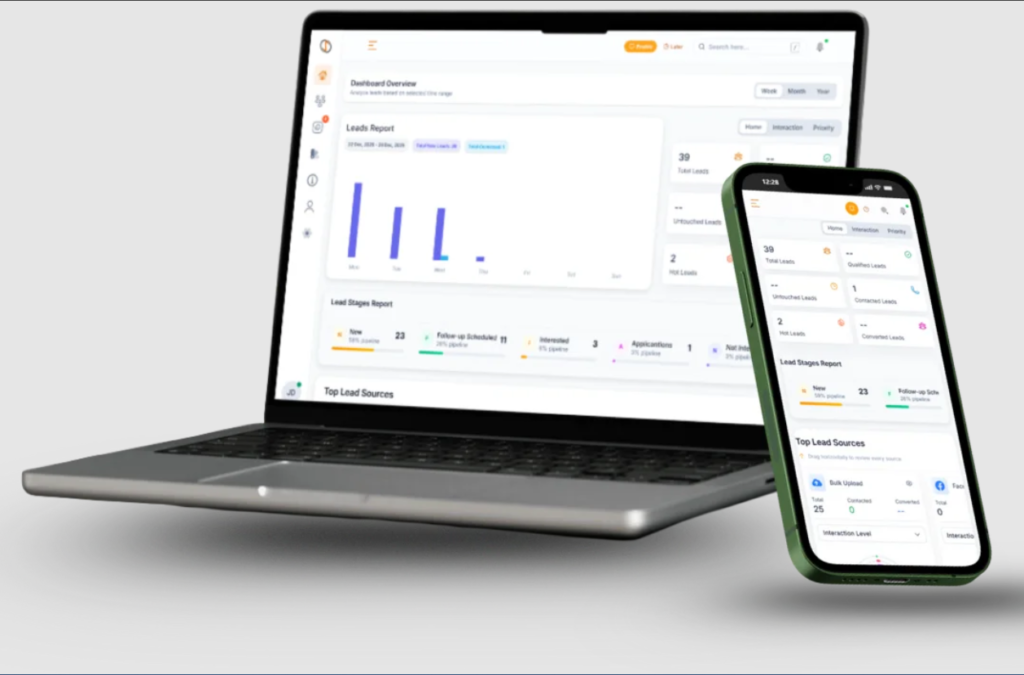
What Is a CRM System for Educational Institutions?
Educational CRM institutions today operate in an increasingly digital environment where managing student inquiries, admissions, communication, and engagement requires more than spreadsheets and manual processes. Schools, colleges, universities, and coaching institutes receive inquiries from multiple channels, including websites, social media platforms, emails, phone calls, and educational events. Managing these interactions efficiently has become essential for institutional growth and student satisfaction.
This is where an Education CRM becomes valuable. An Educational Institutional CRM is designed to help institutions manage relationships with prospective students, current students, parents, alumni, and other stakeholders through a centralized platform. By organizing data, automating communication, and streamlining workflows, CRM systems help educational institutions improve efficiency and enhance the student experience.
Understanding Educational CRM
An Education CRM is a specialized customer relationship management system developed for schools, colleges, universities, and training institutes. Unlike traditional business CRM platforms that focus on sales and customer acquisition, an Educational Institutional CRM is designed around the student lifecycle.
The primary objective of an Education CRM is to manage interactions from the initial inquiry stage through admission, enrollment, engagement, and ongoing communication. Educational institutions use CRM systems to centralize information, track communication history, automate follow-ups, and improve decision-making through data-driven insights.
What Is CRM in Higher Educational CRM?
Many institutions ask, what is CRM in higher education and how it differs from traditional student management systems.
A CRM in higher education is a platform that helps institutions manage relationships and engagement with prospective students, applicants, enrolled students, alumni, faculty, and other stakeholders. Unlike a Student Information System (SIS), which primarily stores academic records and administrative data, a CRM focuses on communication, engagement, recruitment, and relationship management.
Why Educational Institutions Need a CRM System
Educational institutions are expected to provide timely communication, personalized experiences, and efficient admission processes. Managing these responsibilities manually can be challenging.
A modern crm for educational institutions helps schools and colleges:
- Centralize student and parent information
- Improve admissions management
- Automate communication workflows
- Track inquiries and applications
- Improve student engagement
- Generate actionable reports
- Enhance collaboration across departments
Institutions increasingly adopt CRM systems because they help reduce administrative workload while improving communication and operational efficiency.
Key Features of an Educational CRM Institutional
Student Inquiry Management Educational CRM
One of the most important functions of an Education CRM is inquiry management.
Educational institutions in India receive inquiries from various sources, including:
- School and college websites
- Social media platforms
- Email campaigns
- Educational fairs
- Referral programs
A CRM captures these inquiries automatically and stores them in a centralized database for future follow-up and engagement.
Admission Process Automation
Admission management can be a time-consuming process.
A crm for education automates several admission-related tasks, including:
- Inquiry assignment
- Follow-up reminders
- Application tracking
- Status notifications
- Enrollment communication
Educational institutions that implement admission automation often improve response times and reduce the likelihood of missed opportunities. Community discussions among education professionals frequently highlight workflow automation as one of the most valuable CRM capabilities.
Centralized Communication Management
Communication is a critical component of the crm for education industry.
Educational institutions must communicate effectively with students and parents through multiple channels.
An Education CRM often supports:
Email Communication
Automated email campaigns help institutions share updates, reminders, and important announcements.
SMS Notifications
SMS communication ensures timely delivery of urgent information.
WhatsApp Integration
Many educational institutions in India rely on WhatsApp for parent and student communication. Industry discussions suggest that integrating messaging channels with CRM platforms improves engagement and response rates.
Call Tracking
CRM platforms can store call records and communication history, helping admission teams maintain consistent interactions.
Student Application Management
Managing student applications requires coordination across multiple departments.
An Educational Institutional CRM simplifies this process through:
- Online application forms
- Document collection
- Application status tracking
- Verification workflows
- Enrollment management
These capabilities help institutions maintain organized records and improve transparency throughout the admission journey.
Benefits of CRM for Educational Institutions
Improved Operational Efficiency
A crm for educational institutions eliminates many repetitive manual tasks, allowing staff to focus on student engagement and institutional priorities.
Better Student Experience
Students expect quick responses and personalized communication. An Education CRM helps institutions provide a more consistent and responsive experience.
Data-Driven Decision Making
Reporting and analytics features help institutions evaluate admission performance, communication effectiveness, and enrollment trends.
Enhanced Collaboration
A centralized CRM enables departments to access shared information, improving coordination and reducing duplication of effort.
Education CRM and Educational Institutions in India
The demand for CRM technology continues to grow among educational institutions in India. Schools, colleges, universities, coaching centers, and training institutes are increasingly adopting digital solutions to improve admissions, communication, and student engagement.
As competition among educational institutions increases, the ability to respond quickly to inquiries and manage student relationships efficiently becomes a significant advantage. CRM systems help institutions create more structured and transparent processes while supporting digital transformation initiatives.
Education CRM Tools Available Today
There are numerous education CRM tools available for institutions of different sizes and requirements.
Common categories include:
Cloud-Based CRM Solutions
Cloud-based systems offer flexibility, scalability, and remote accessibility. Research indicates that cloud technologies continue to play an important role in modern educational technology ecosystems.
Institution-Specific CRM Platforms
These platforms are designed specifically for educational workflows, admissions processes, and student engagement requirements.
Customizable CRM Systems
Some institutions choose configurable CRM platforms that can be adapted to their unique operational processes.
When evaluating CRM solutions, institutions should consider functionality, scalability, ease of use, integration capabilities, and support requirements.
How to Choose the Right CRM for Education
Selecting the right crm for education industry depends on several factors.
Institutions should evaluate:
Ease of Use
The platform should be simple for administrators, counselors, and staff to use.
Integration Capabilities
The CRM should integrate with Student Information Systems (SIS), Learning Management Systems (LMS), communication tools, and other educational technologies.
Automation Features
Workflow automation helps reduce administrative burden and improve efficiency.
Reporting and Analytics
Comprehensive reporting capabilities support data-driven decision-making.
Scalability
The system should support future growth and evolving institutional requirements.
Experts in higher education technology often emphasize that successful CRM implementation depends on choosing a platform that aligns with existing workflows rather than forcing staff to adopt completely new processes.
Conclusion
An Education CRM is no longer just a technology investment; it has become an essential tool for managing modern educational operations. From inquiry management and admissions automation to communication tracking and student engagement, an Educational Institutional CRM helps institutions create more efficient and connected experiences.
Understanding what is CRM in higher education and how CRM systems support schools, colleges, and other educational institutions in India allows decision-makers to choose solutions that align with their goals. Whether an institution is exploring a crm for education, evaluating options within the crm for education industry, or searching for the most suitable crm for educational institutions, the right CRM can help improve communication, streamline workflows, and support long-term institutional success.
An Education CRM is a customer relationship management system designed specifically for educational institutions. It helps schools, colleges, and universities manage student inquiries, admissions, communication, enrollment processes, and stakeholder relationships through a centralized platform.
It refers to the use of CRM technology by colleges and universities to manage relationships with prospective students, current students, alumni, and parents. These systems help improve recruitment, communication, engagement, and enrollment management.
A crm for educational institutions helps streamline admissions, automate communication, improve student engagement, centralize data, and reduce administrative workload. It enables institutions to provide a better experience for students and parents while improving operational efficiency.
An Education CRM automates inquiry tracking, lead management, follow-up reminders, application monitoring, and enrollment communication. This helps admission teams respond faster and manage applications more effectively.
Leave a Reply