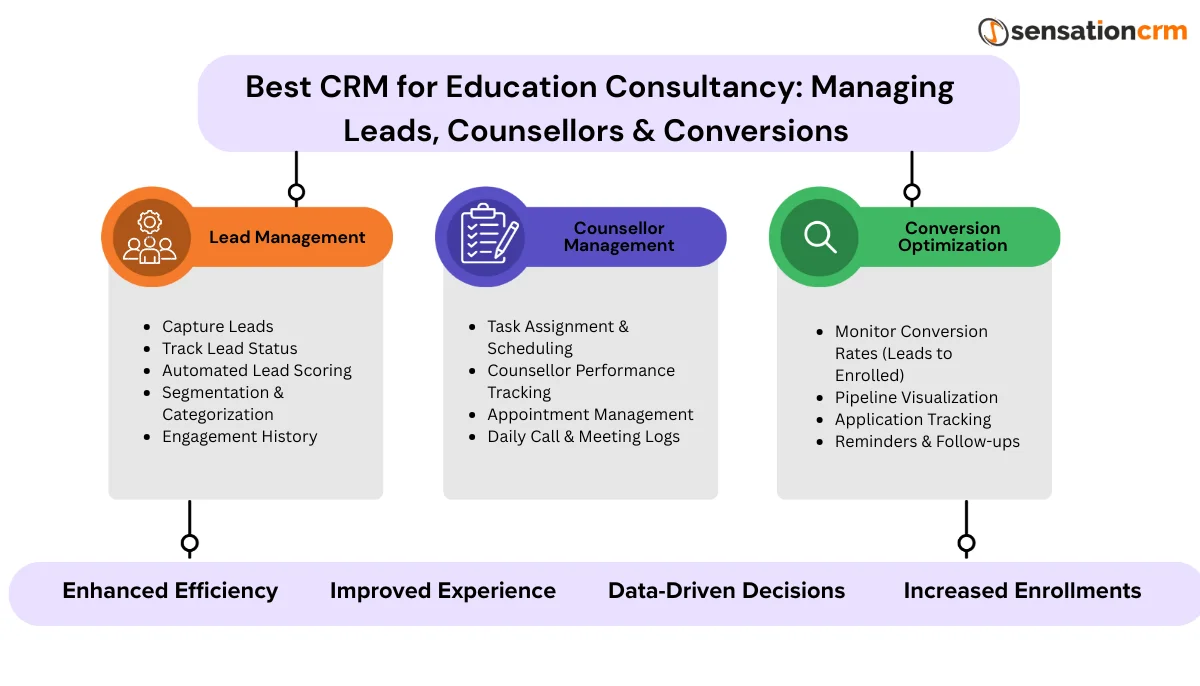
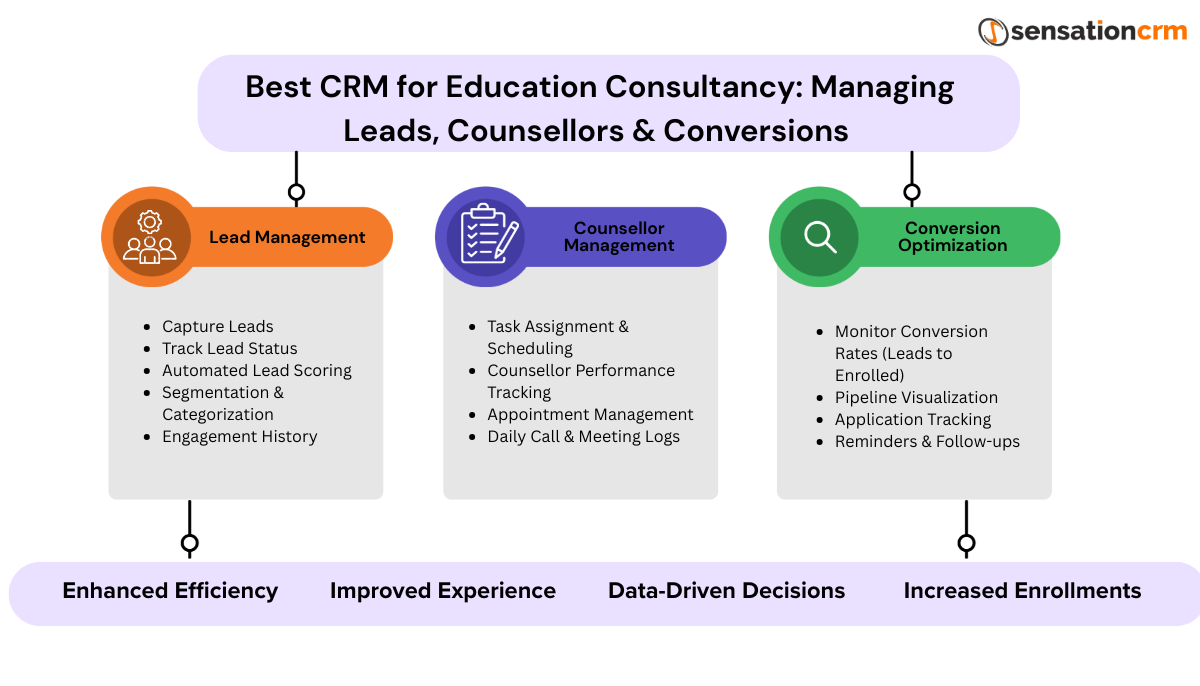
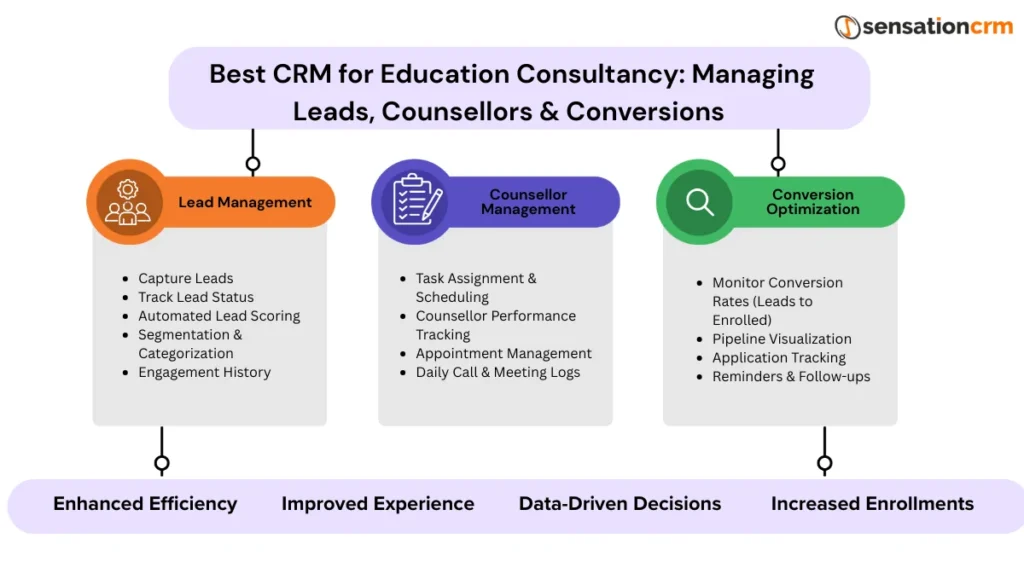
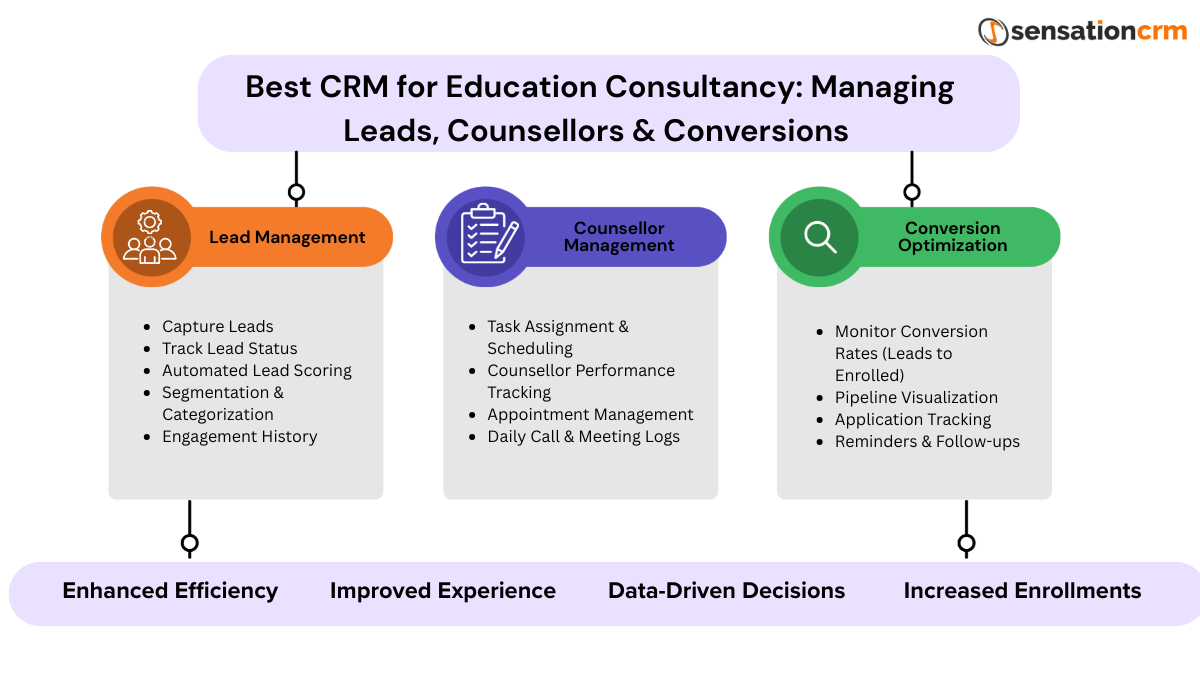
In today’s admission-driven ecosystem, education consultancies are not struggling to get leads–they are struggling to manage them properly.
Leads come from:
Website forms
WhatsApp
Calls
Social media
Walk-ins
And without a structured system, things quickly become messy–missed follow-ups, confused counsellors, and lost admissions.
That’s exactly where an Education CRM becomes essential.
And if you’re looking for a solution built specifically for this space, Sensation CRM stands out as one of the most practical and conversion-focused tools available.
Why Education Consultancies Need a CRM (Not Optional Anymore)
Let’s be real.
Most consultancies still use:
Excel sheets
WhatsApp chats
Manual tracking
This leads to:
Scattered data
Delayed responses
Zero visibility into lead status
According to industry insights, managing inquiries across multiple channels without a system leads to missed follow-ups and poor conversion rates
And in admission season, even a small delay can cost you a student.
What Makes an Education CRM Different?
A normal CRM is built for sales pipelines.
But CRM in higher education works differently.
Longer decision cycles
Multiple stakeholders (student + parents)
Complex admission stages
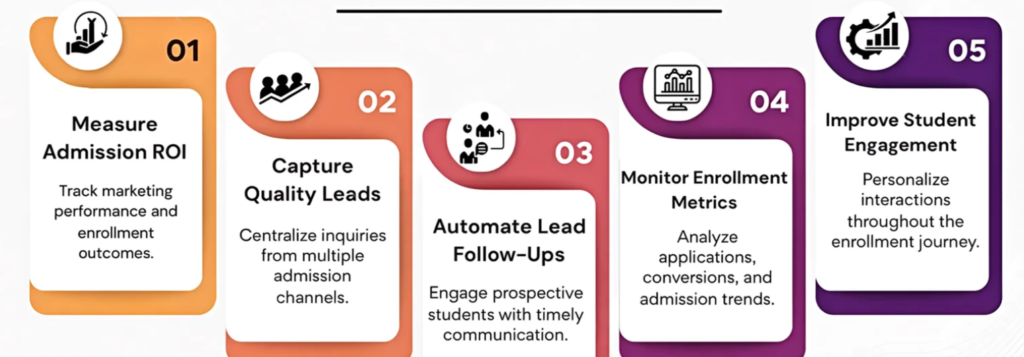
Education CRM systems are designed around the complete student lifecycle from inquiry to enrollment. This is where Sensation CRM is specifically built to perform.
Why Sensation CRM is the Best CRM for Education Consultancy
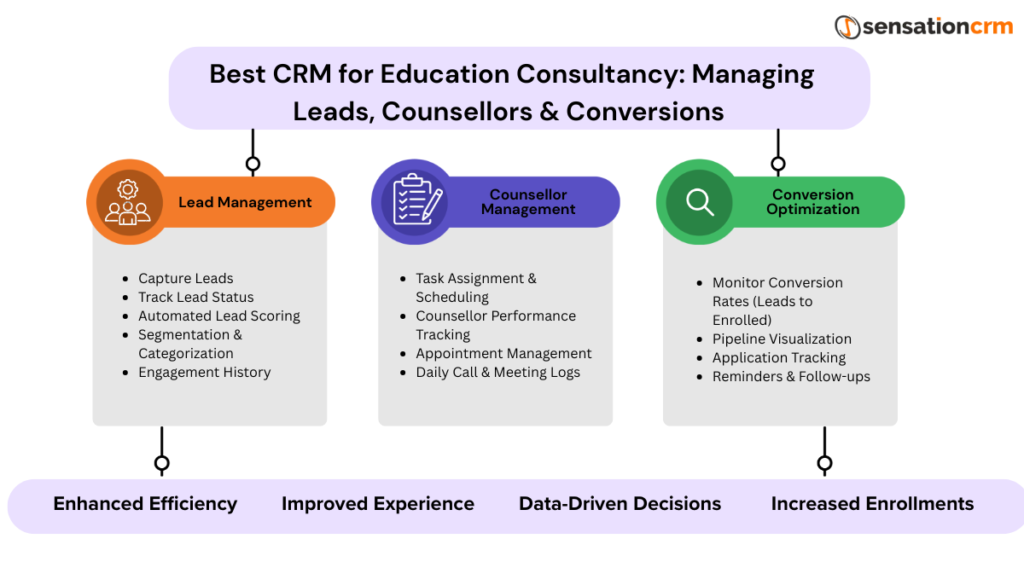
1. Centralized Lead Management (No More Lost Leads)
With Sensation CRM:
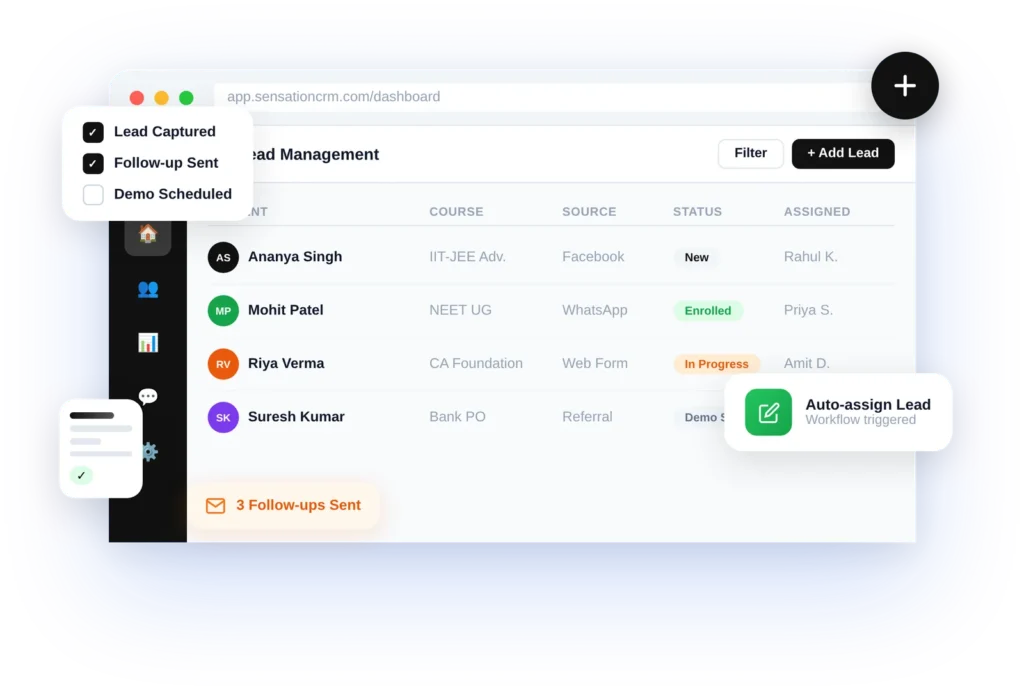
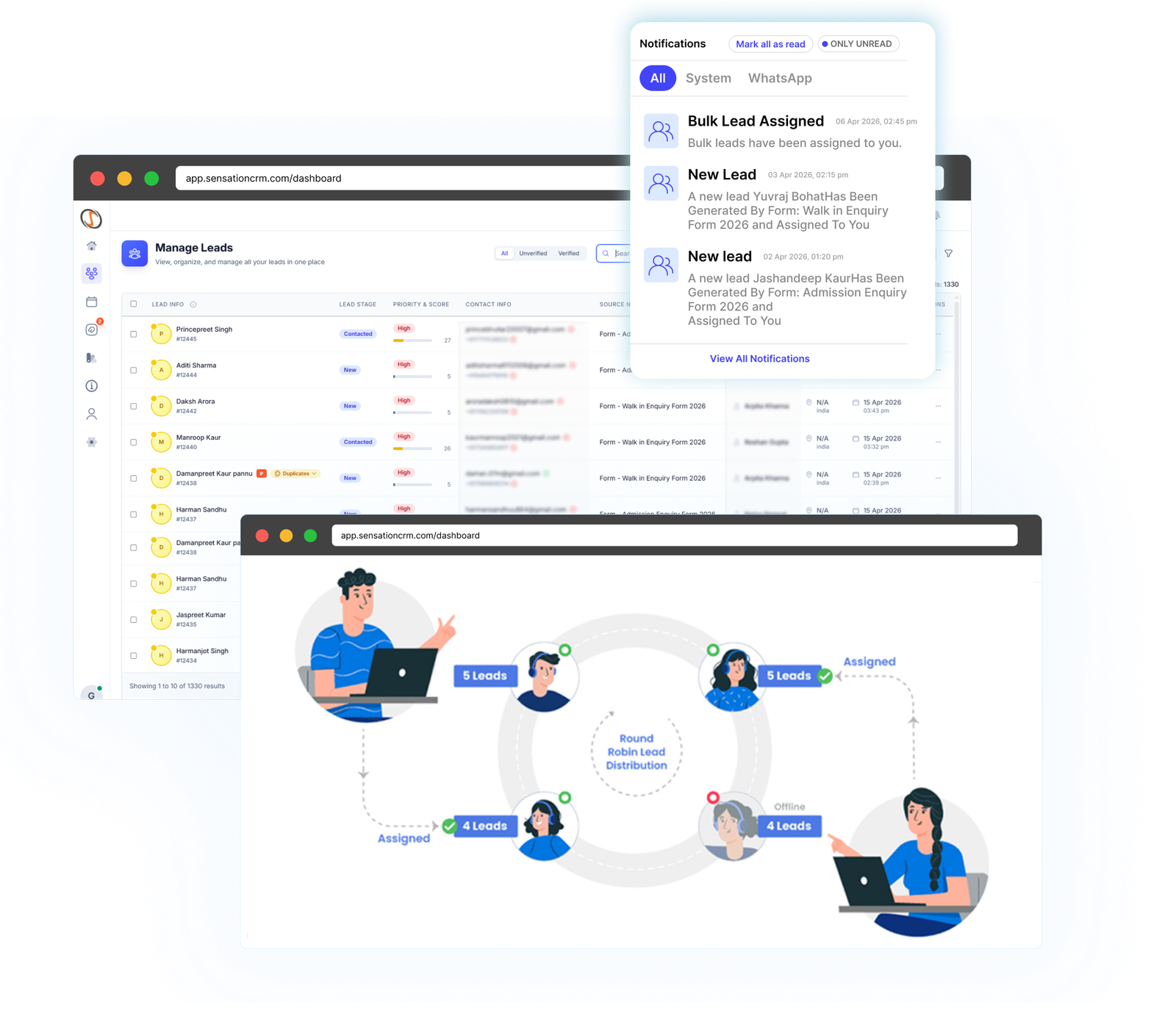
Leads from website, calls, WhatsApp, and forms are captured automatically
This improves accountability and ensures faster response time.
3. Complete Student Profile & Timeline
Each lead has:
Call logs
WhatsApp chats
Email history
Notes and documents
Everything is visible in one place.
This helps counsellors have better, more personalized conversations.
4. Automation That Actually Works
Manual follow-ups are unreliable.
With Sensation CRM:
Auto WhatsApp replies
Email drip campaigns
Call reminders
Follow-up scheduling
Automation ensures:
Faster responses
Consistent communication
Higher conversions
In fact, automation removes dependency on memory–which is a major cause of lead loss.
5. Full Admission Funnel Tracking
You can track every stage:
Stage
Meaning
New Lead
Fresh inquiry
Contacted
First interaction
Interested
Considering options
Applied
Application submitted
Enrolled
Final conversion
This structured funnel removes guesswork and improves decision-making.
6. Real-Time Dashboard & Analytics
Sensation CRM provides:
Lead source tracking
Conversion rates
Counsellor performance
ROI insights
This helps consultancies: Identify what’s working Fix what’s not
And make data-driven decisions, not assumptions.
7. Built for Education (Not Generic Sales)
Unlike generic CRMs:
It supports admission workflows
Handles parent-student communication
Tracks counsellor performance
This reduces the need for heavy customization and improves adoption rates
8. Scalable for Growth
As your consultancy grows:
More leads
More counsellors
More programs
Sensation CRM scales without complexity and keeps everything structured
Key Benefits of Using Sensation CRM
For Education Consultancies:
No lead leakage
Faster response time
Better team coordination
Higher conversion rates
For Counsellors:
Clear lead ownership
Easy follow-up tracking
Less manual work
For Management:
Full visibility
Data-driven decisions
Better ROI tracking
Before vs. After Using Sensation CRM
Without CRM
With Sensation CRM
Excel + WhatsApp chaos
Centralized system
Missed follow-ups
Automated tracking
No visibility
Real-time dashboards
Low conversions
Higher conversions
Why it’s perfect for Education Consultancies
Education consultancies deal with:
High lead volume
Multi-channel communication
Long decision cycles
Sensation CRM is designed exactly for this.
It:
Captures every lead
Tracks every interaction
Converts more students
That’s what actually matters.
Choosing the Right Education CRM
Choosing the right Education CRM is not just about managing leads–it about improving your entire admission process. Most consultancies lose students not because of lack of leads… but because of poor management.Contact us today to streamline your admission process and start converting more leads into students.
Sensation CRM solves this by bringing:
Structure
Automation
Visibility
Key Note:
If you want to scale your education consultancy, you don’t just need more leads-you need a system that converts them.
Frequently Asked Question’s
What is an Education CRM?
An Education CRM is a system designed to manage student inquiries, track admissions, and improve conversions across the entire student journey.
How does Sensation CRM help in lead management?
Is Sensation CRM suitable for small consultancies?
AI powered Sensation CRM is designed to streamline relationship management by combining advanced CRM technology with proven strategies to enhance engagement, improve satisfaction, and accelerate business growth.
In today’s admission-driven ecosystem, education consultancies are not struggling to get leads–they are struggling to manage them properly.
Leads come from:
Website forms
WhatsApp
Calls
Social media
Walk-ins
And without a structured system, things quickly become messy–missed follow-ups, confused counsellors, and lost admissions.
That’s exactly where an Education CRM becomes essential.
And if you’re looking for a solution built specifically for this space, Sensation CRM stands out as one of the most practical and conversion-focused tools available.
Why Education Consultancies Need a CRM (Not Optional Anymore)
Let’s be real.
Most consultancies still use:
Excel sheets
WhatsApp chats
Manual tracking
This leads to:
Scattered data
Delayed responses
Zero visibility into lead status
According to industry insights, managing inquiries across multiple channels without a system leads to missed follow-ups and poor conversion rates
And in admission season, even a small delay can cost you a student.
What Makes an Education CRM Different?
A normal CRM is built for sales pipelines.
But CRM in higher education works differently.
Longer decision cycles
Multiple stakeholders (student + parents)
Complex admission stages
Education CRM systems are designed around the complete student lifecycle from inquiry to enrollment. This is where Sensation CRM is specifically built to perform.
Why Sensation CRM is the Best CRM for Education Consultancy
1. Centralized Lead Management (No More Lost Leads)
With Sensation CRM:
Leads from website, calls, WhatsApp, and forms are captured automatically
In today’s admission-driven ecosystem, education consultancies are not struggling to get leads–they are struggling to manage them properly.
Leads come from:
Website forms
WhatsApp
Calls
Social media
Walk-ins
And without a structured system, things quickly become messy–missed follow-ups, confused counsellors, and lost admissions.
That’s exactly where an Education CRM becomes essential.
And if you’re looking for a solution built specifically for this space, Sensation CRM stands out as one of the most practical and conversion-focused tools available.
Why Education advice Need a CRM (Not Optional Anymore)
Let’s be real.
Most consultancies still use:
Excel sheets
WhatsApp chats
Manual tracking
This leads to:
Scattered data
Delayed responses
Zero visibility into lead status
According to industry insights, managing inquiries across multiple channels without a system leads to missed follow-ups and poor conversion rates
And in admission season, even a small delay can cost you a student.
What Makes an Education CRM Different?
A normal CRM is built for sales pipelines.
But CRM in higher education works differently.
Longer decision cycles
Multiple stakeholders (student + parents)
Complex admission stages
Education CRM systems are designed around the complete student lifecycle from inquiry to enrollment. This is where Sensation CRM is specifically built to perform.
Why Sensation CRM is the Best CRM for Education Advice
1. Centralized Lead Management (No More Lost Leads)
With Sensation CRM:
Leads from website, calls, WhatsApp, and forms are captured automatically
This improves accountability and ensures faster response time.
3. Complete Student Profile & Timeline
Each lead has:
Call logs
WhatsApp chats
Email history
Notes and documents
Everything is visible in one place.
This helps counsellors have better, more personalized conversations.
4. Automation That Actually Works
Manual follow-ups are unreliable.
With Sensation CRM:
Auto WhatsApp replies
Email drip campaigns
Call reminders
Follow-up scheduling
Automation ensures:
Faster responses
Consistent communication
Higher conversions
In fact, automation removes dependency on memory–which is a major cause of lead loss.
5. Full Admission Funnel Tracking
You can track every stage:
Stage
Meaning
New Lead
Fresh inquiry
Contacted
First interaction
Interested
Considering options
Applied
Application submitted
Enrolled
Final conversion
This structured funnel removes guesswork and improves decision-making.
6. Real-Time Dashboard & Analytics
Sensation CRM provides:
Lead source tracking
Conversion rates
Counsellor performance
ROI insights
This helps consultancies: Identify what’s working Fix what’s not
And make data-driven decisions, not assumptions.
7. Built for Education (Not Generic Sales)
Unlike generic CRMs:
It supports admission workflows
Handles parent-student communication
Tracks counsellor performance
This reduces the need for heavy customization and improves adoption rates
8. Scalable for Growth
As your consultancy grows:
More leads
More counsellors
More programs
Sensation CRM scales without complexity and keeps everything structured
Key Benefits of Using Sensation CRM
Education Consultancies:
No lead leakage
Faster response time
Better team coordination
Higher conversion rates
Counsellors:
Clear lead ownership
Easy follow-up tracking
Less manual work
Management:
Full visibility
Data-driven decisions
Better ROI tracking
Before vs. After Using Sensation CRM
Without CRM
With Sensation CRM
Excel + WhatsApp chaos
Centralized system
Missed follow-ups
Automated tracking
No visibility
Real-time dashboards
Low conversions
Higher conversions
Why it’s perfect for Education Consultancies
Education consultancies deal with:
High lead volume
Multi-channel communication
Long decision cycles
Sensation CRM is designed exactly for this.
It:
Captures every lead
Tracks every interaction
Converts more students
That’s what actually matters.
Choosing the Right Education CRM
Choosing the right Education CRM is not just about managing leads–it about improving your entire admission process. Most consultancies lose students not because of lack of leads… but because of poor management.Contact us today to streamline your admission process and start converting more leads into students.
Sensation CRM solves this by bringing:
Structure
Automation
Visibility
Key Note:
If you want to scale your education consultancy, you don’t just need more leads-you need a system that converts them.
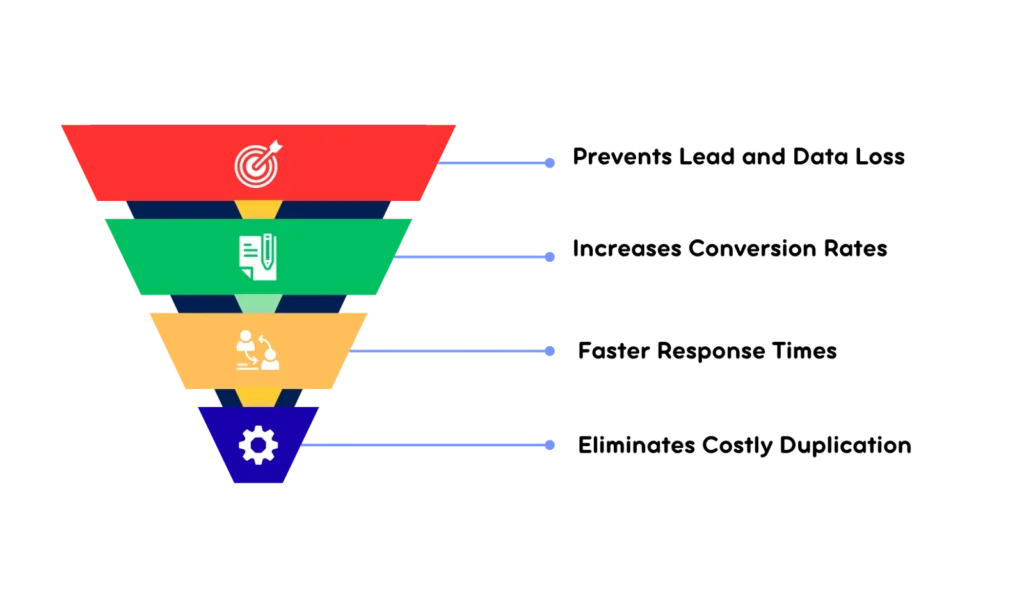
First, Educational Lead Management collects student inquiries. Next, it assigns leads to counselors. Additionally, it improves follow-ups. As a result, institutions can increase admissions.. An effective educational lead management system improves admissions by reducing duplicate leads and ensuring timely follow-ups.
Sensation CRM simplifies Educational Lead Management by bringing all student inquiries into one centralized dashboard. It provides complete visibility, automates follow-ups, assigns leads to counselors, and helps institutions respond faster while improving admission conversions.
How Educational Lead Management Eliminates Lead Duplication
Duplicate inquiries make it hard to track performance and inflate manual workload. Sensation CRM uses advanced source tracking and unique lead identification logic that:
Your counselors always know which lead to work on and who owns it.
How AI- powered Sensation CRM’s help in Lead Management System?
Sensation CRM uses AI to automatically score, segment, and prioritize leads based on behavior, source, and engagement. This helps counselors focus on high-intent prospects, improving conversion rates and reducing manual effort.
What challenges do institutions face without a lead management system?
Common challenges include:
Poor communication with prospects
Missed or delayed follow-ups
Lead data scattered across platforms
Low conversion rates
Lack of performance tracking
Is Sensation CRM scalable for growing educational institutions?
Yes, Sensation CRM is built to scale with institutions of all sizes from small coaching centers to large universities handling increasing lead volumes, multiple campuses, and expanding teams seamlessly.
How does Sensation CRM help improve student enrollments?
By automating lead nurturing, prioritizing hot leads, and ensuring timely follow-ups, Sensation CRM helps institutions engage prospects effectively and convert more inquiries into confirmed admissions.
CRM for Colleges and Universities: Tracking ROI, Leads and Enrollment Success
Colleges and universities today face growing competition to attract and enroll students. As more students begin their search online, institutions need faster and more personalized ways to engage with prospective applicants.
To meet these expectations, many educational institutions are adopting CRM software that helps manage inquiries, improve communication, and track enrollment performance from a single platform.
This is why colleges and universities are investing in CRM for Colleges And Universities.lleges and Universities solutions that centralize student interactions, automate communication, and provide complete visibility into the enrollment funnel.
How Universities Manage Student Inquiries in 2026
One of the biggest challenges facing admission teams is handling thousands of inquiries across websites, social media platforms, education portals, WhatsApp, webinars, email campaigns, and counselling sessions
Handling 2,000+ inquiries
Student communication challenges
Missed follow-ups
A modern Education CRM Software solution helps universities capture, organize, and nurture student inquiries through a structured admission workflow.
CRM vs. ERP for Universities: What Is the Difference?
A common question among educational institutions is whether they need a CRM or an ERP system.
Feature
CRM for Universities
ERP for Universities
Student Recruitment
Yes
Limited
Lead Management
Yes
No
What is CRM for Colleges and Universities Answer: Colleges and universities today face growing competition to attract and enroll students. As more students begin their search online, institutions need faster and more personalized ways to engage with prospective applicant
In today’s admission-driven ecosystem, education consultancies are not struggling to get leads–they are struggling to manage them properly.
Leads come from:
Website forms
WhatsApp
Calls
Social media
Walk-ins
And without a structured system, things quickly become messy–missed follow-ups, confused counsellors, and lost admissions.
That’s exactly where an Education CRM becomes essential.
And if you’re looking for a solution built specifically for this space, Sensation CRM stands out as one of the most practical and conversion-focused tools available.
Why Education Consultancies Need a CRM (Not Optional Anymore)
Let’s be real.
Most consultancies still use:
Excel sheets
WhatsApp chats
Manual tracking
This leads to:
Scattered data
Delayed responses
Zero visibility into lead status
According to industry insights, managing inquiries across multiple channels without a system leads to missed follow-ups and poor conversion rates
And in admission season, even a small delay can cost you a student.
What Makes an Education CRM Different?
A normal CRM is built for sales pipelines.
But CRM in higher education works differently.
Longer decision cycles
Multiple stakeholders (student + parents)
Complex admission stages
Education CRM systems are designed around the complete student lifecycle from inquiry to enrollment. This is where Sensation CRM is specifically built to perform.
Why Sensation CRM is the Best CRM for Education Consultancy
1. Centralized Lead Management (No More Lost Leads)
With Sensation CRM:
Leads from website, calls, WhatsApp, and forms are captured automatically
This improves accountability and ensures faster response time.
3. Complete Student Profile & Timeline
Each lead has:
Call logs
WhatsApp chats
Email history
Notes and documents
Everything is visible in one place.
This helps counsellors have better, more personalized conversations.
4. Automation That Actually Works
Manual follow-ups are unreliable.
With Sensation CRM:
Auto WhatsApp replies
Email drip campaigns
Call reminders
Follow-up scheduling
Automation ensures:
Faster responses
Consistent communication
Higher conversions
In fact, automation removes dependency on memory–which is a major cause of lead loss.
5. Full Admission Funnel Tracking
You can track every stage:
Stage
Meaning
New Lead
Fresh inquiry
Contacted
First interaction
Interested
Considering options
Applied
Application submitted
Enrolled
Final conversion
This structured funnel removes guesswork and improves decision-making.
6. Real-Time Dashboard & Analytics
Sensation CRM provides:
Lead source tracking
Conversion rates
Counsellor performance
ROI insights
This helps consultancies: Identify what’s working Fix what’s not
And make data-driven decisions, not assumptions.
7. Built for Education (Not Generic Sales)
Unlike generic CRMs:
It supports admission workflows
Handles parent-student communication
Tracks counsellor performance
This reduces the need for heavy customization and improves adoption rates
8. Scalable for Growth
As your consultancy grows:
More leads
More counsellors
More programs
Sensation CRM scales without complexity and keeps everything structured
Key Benefits of Using Sensation CRM
For Management:
Full visibility
Data-driven decisions
Better ROI tracking
Before vs. After Using Sensation CRM
Without CRM
With Sensation CRM
Excel + WhatsApp chaos
Centralized system
Missed follow-ups
Automated tracking
No visibility
Real-time dashboards
Low conversions
Higher conversions
Why it’s perfect for Education Consultancies
Education consultancies deal with:
High lead volume
Multi-channel communication
Long decision cycles
Sensation CRM is designed exactly for this.
It:
Captures every lead
Tracks every interaction
Converts more students
That’s what actually matters.
Choosing the Right Education CRM
Choosing the right Education CRM is not just about managing leads–it about improving your entire admission process. Most consultancies lose students not because of lack of leads… but because of poor management.Contact us today to streamline your admission process and start converting more leads into students.
What is Banking CRM Software? A Comprehensive Definition
In the modern financial landscape, a Banking CRM acts as a centralized intelligence hub. Unlike generic CRMs used in retail or hospitality, the best CRM for banks is engineered to handle high-security financial data, complex regulatory requirements, and the unique lifecycle of banking products like mortgages, personal loans, and wealth management portfolios.
A banking CRM allows institutions to be hyper-responsive to customer requirements. By providing a 360-degree view of a client’s past history—including transaction patterns, credit scores, and communication preferences—banks can predict future service needs with surgical precision. To achieve this level of technical integration, leading firms often hire database developers to ensure that data from legacy systems and modern mobile apps are synchronized in real-time.
Why CRM is the Backbone of Digital Banking in 2026
The rise of AI-driven fintech and global digital banks has shifted the power dynamic toward the consumer. Traditional institutions face unprecedented competition from “neobanks” that offer seamless, mobile-only experiences. A customer-oriented approach is no longer a luxury; it is a survival requirement.
Why CRM is the Backbone of Digital Banking in 2026
Implementing a custom CRM solution offers transformative benefits across all departments, from the front-desk teller to the back-office compliance officer.
Hyper-Segmentation: Grouping customers by risk profile, investment habits, and life stages to offer targeted products.
Data-Driven Marketing: Using analytics to fuel marketing growth and maximize ROI on digital ad spend.
Workforce Productivity: Eliminating manual data entry and automating repetitive tasks like loan follow-ups.
Regulatory Compliance: Automated audit trails ensure every interaction meets industry standards like GDPR or local financial regulations.
Enhanced Lead Conversion: Tracking prospects through the funnel to ensure no high-value lead is lost.
Centralized Communication: Syncing emails, calls, and chat logs into a single source of truth.
Real-Time Reporting: Instant access to KPIs and branch performance metrics.
Scalability: A custom solution grows with your institution, supporting more users and data without performance lag.
Deep Dive: 3 Types of CRM Systems Used in Banking
1. Operational CRM
Operational CRMs focus on the “front office” tasks. They facilitate lead management, sales automation, and customer support. For businesses requiring external business listings and specialized management,
2. Analytical CRM
Designed for deep data mining, Analytical CRMs process raw data to extract valuable patterns.
3. Strategic (Collaborative) CRM
Perfect for large-scale institutions with multiple departments. It ensures that the mortgage department knows what the retail banking department is doing, preventing redundant outreach and providing a unified brand experience.
Integrating AI and Machine Learning into Banking CRMs
By 2026, AI will be inseparable from CRM technology. Predictive analytics can now forecast which customers are likely to default on loans or which are ready for wealth management services. Integrating these features requires a high level of expertise .
Sensation Solutions: Your Partner in Financial Technology
As a global leader in digital transformation, Sensation Solutions has been recognized across major business platforms for our excellence in building enterprise-grade financial tools.
Sensation Solutions on Crunchbase – Explore our company milestones and investment in innovation.
Sensation on Clutch – Read verified client reviews about our software development projects.
Sensation Solutions on GoodFirms – See our rankings among the top software development companies globally.
Frequently Asked Questions (FAQ)
What is the main purpose of a CRM in banking?
The primary purpose is to centralize customer data to provide a 360-degree view of each client. This allows banks to personalize services, improve customer retention, and automate repetitive operational tasks.
How does a banking CRM improve security and compliance?
Custom banking CRMs include automated audit trails, encrypted data storage, and role-based access controls. These features ensure that the institution remains compliant with global regulations like GDPR and local financial laws.
Can a CRM help in reducing bank attrition rates?
Yes. By using predictive analytics, a CRM can identify patterns that suggest a customer is likely to leave. This allows the bank to proactively offer personalized incentives or better service to retain the client.
Is AI integration necessary for modern banking CRMs?
. AI powers chatbots for instant support and predictive models for risk assessment, which are now standard expectations in the fintech industry.
Final Words on Custom CRM Development
Building a CRM for the banking sector is not just about code; it’s about understanding the delicate balance between user experience and data security. Sensation specializes in building enterprise-grade, custom tailored for the financial sector.
Education CRM Software vs Generic CRM: Key Differences Explained
Best EDUCATION CRM Built for The Student Lifecycle
Education CRM software is designed to support the complete student journey. From the first inquiry to enrollment and post-admission engagement, every stage is connected within a single system.
Unlike traditional buyers, students rarely make quick decisions. They often compare institutions, ask multiple questions, and take time before applying. Some may even pause their decision-making process and return weeks later.
Best EDUCATION CRM Admissions Workflow Support
Admissions workflows involve more than just “open” and “closed” stages. There are document checks, eligibility confirmations, fee discussions, seat availability concerns, and academic approvals. An education CRM solution includes these workflows by default, so teams can move students through each stage without confusion. Generic CRMs usually require heavy customization to replicate this, and even then, the process often feels forced or incomplete.
Parent Student Communication Handling
In education, communication is rarely one-to-one. Parents, guardians, and sometimes sponsors are involved in the decision-making process. software allows institutions to manage multiple contacts linked to a single student profile. This ensures that updates reach the right people at the right time. Generic CRMs usually treat each contact as an individual buyer, which can result in fragmented communication and missing context.
Counselor Management Structure
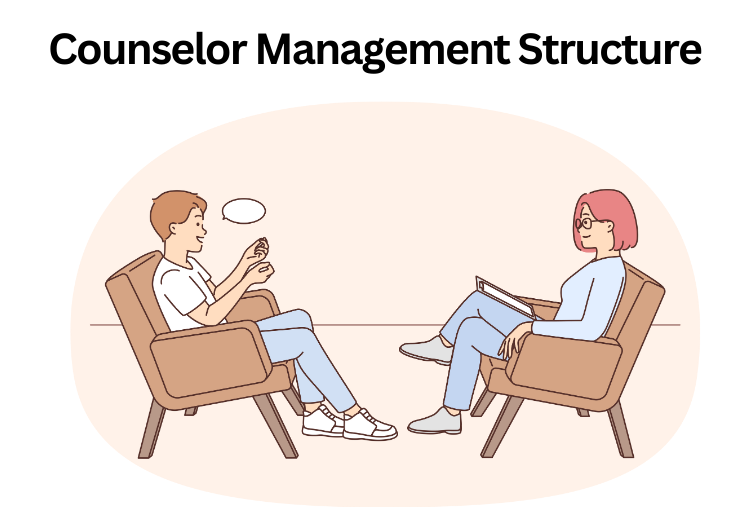
Education CRM software is built to support counselors rather than sales representatives. It tracks counselor assignments, follow-ups, workloads, and response times in a way that reflects academic counseling rather than sales pressure. This helps institutions ensure fair distribution of inquiries and consistent follow-ups. Generic CRMs focus on deal ownership and sales quotas, which don’t translate well to counseling environments.
Best Education CRMAcademic Reporting and Insights.
Education-focused reporting looks very different from sales reporting. Institutions need to understand which programs attract the most interest, where students drop off in the admission process, how long decisions take, and which counselors need support. An solution provides these insights in a usable, institution-ready format. Generic CRMs mainly report on revenue forecasts and pipeline velocity, which offer limited value in academic decision-making.
Compliance and Data Sensitivity
Educational institutions handle sensitive student information that must be protected carefully. Education CRM software is designed with this responsibility in mind, offering role-based access, audit trails, and controlled data visibility. This ensures that staff members only see the information relevant to their role. Generic CRMs can be secured, but compliance is not their primary design focus, making them riskier if not managed carefully.
Reduced Customization Dependency
One common issue with generic CRMs is the need for extensive customization to fit education workflows. Over time, this creates dependency on technical teams and increases maintenance costs. Education CRM software already understands academic structures, making it anideal solution for schools, colleges, and coaching institutes that need stability rather than constant configuration.
Best Education CRMHigher Student Adoption Rates.
Admissions teams are more likely to use a system that feels intuitive and aligned with their daily tasks. Education CRM software mirrors how counselors already work, which leads to higher adoption and better data quality through effective student management. Generic CRMs often feel foreign to academic staff, lacking proper student management controls and causing teams to fall back on spreadsheets or personal notes, which defeats the purpose of having a CRM at all.
Scalability Without Operational Chaos
As institutions grow, they face higher inquiry volumes, more programs, and larger counseling teams. Education CRM software scales without disrupting existing workflows, maintaining structure even as complexity increases. Generic CRMs can scale technically, but without proper academic logic, they often create confusion as the institution grows.
Cost vs Long-Term Value
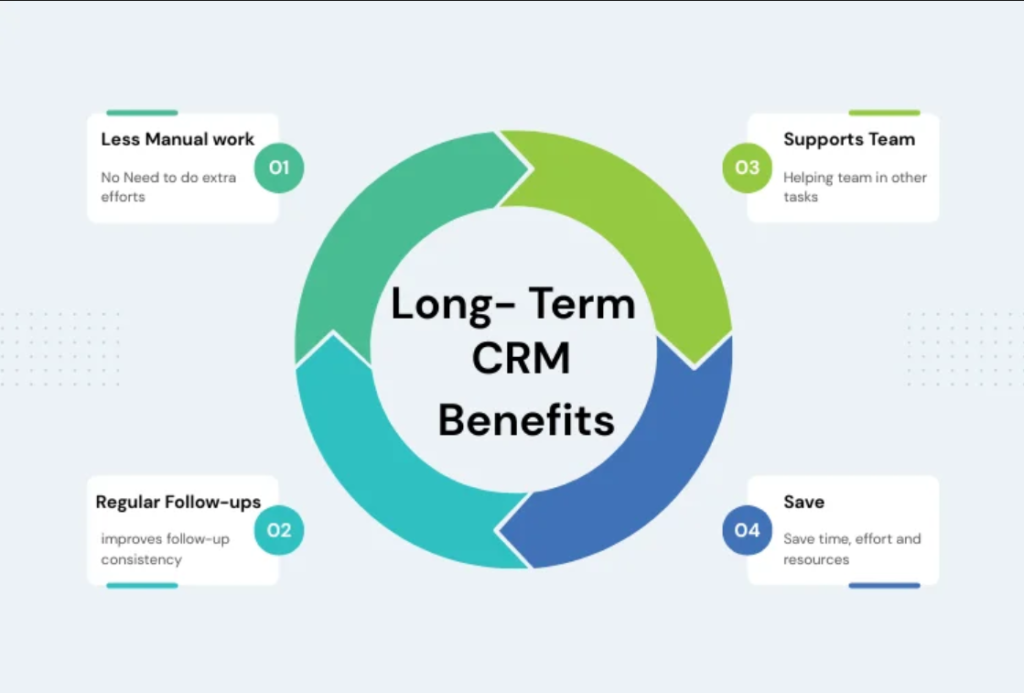
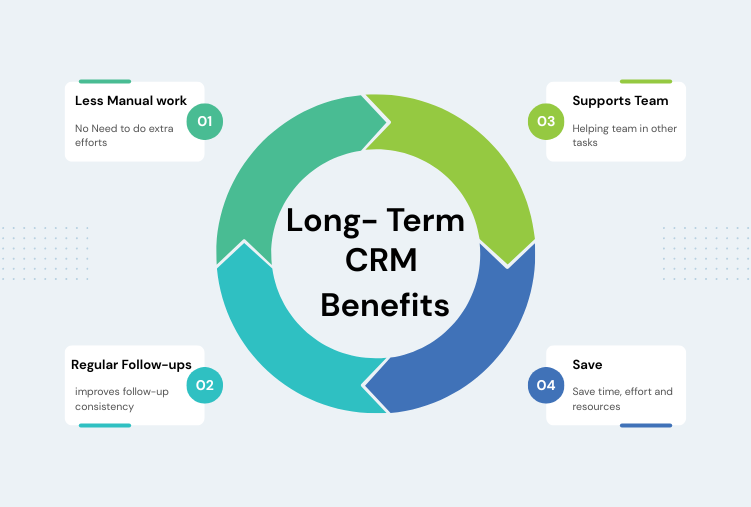
While generic CRMs may appear cheaper initially, the long-term costs of customization, training, and inefficiency often outweigh the savings. Education CRM software delivers better value over time because it reduces manual work, improves follow-up consistency, and supports admissions teams more effectively. Institutions end up saving time, effort, and resources in the long run.
Why This Difference Matters in Practice
Choosing between a generic CRM and education CRM software isn’t just a technical decision. It directly affects how smoothly admissions teams operate, how effectively lead management is handled, how students experience the institution, and how leadership makes decisions. A system built for education reduces friction and supports sustainable growth.
Final Thought
Education institutions don’t need to force their processes into a sales-oriented system. They need tools that respect how education actually works.
Sensation CRM is designed specifically for academic environments, supporting admissions workflows, counselor operations, and institutional reporting without unnecessary complexity. For schools, colleges, and coaching institutes that value clarity, accountability, and long-term scalability, using an education-focused CRM makes everyday work simpler and more effective.
What is the difference between education CRM software and generic CRM?
Education CRM software is tailored around student lifecycles and admissions processes, while generic CRMs focus on sales pipelines and deal closures.
Can a generic CRM be used in education?
They can be adapted, but they usually require heavy customization and may not fit natural education workflows.
What features does education CRM software include?
Education CRMs include inquiry management, counselor assignments, admissions stage tracking, parent-student relationship mapping, and academic reporting.
Why is reporting different in education CRMs?
Education-focused reporting highlights admissions funnels, follow-ups, conversions, and counselor performance rather than sales revenue.
Why AI & ML Development Services Are Important for AI-Driven Business Innovation
Artificial intelligence is no longer limited to research labs or large technology corporations. Businesses across healthcare, finance, ecommerce, logistics, education, manufacturing, and real estate are now integrating intelligent systems into daily operations to improve productivity, automate repetitive tasks, and create more personalized customer experiences.
The growing demand for intelligent automation has significantly increased the importance of AI & ML development services. Organizations are no longer investing in AI only for experimentation. They now require scalable AI ecosystems capable of improving operational efficiency, accelerating decision-making, and supporting long-term digital transformation strategies.
Operational Infrastructure Layer for Modern Businesses
Technology leaders and global enterprises increasingly view AI as the next major operational infrastructure layer for modern businesses. Microsoft CEO Satya Nadella recently emphasized that every company will eventually become an AI-powered company as intelligent systems continue integrating into daily business operations. Similarly, Jensen Huang has repeatedly stated that AI is becoming the “new industrial revolution” because of its impact on productivity, automation, and enterprise innovation.
According to recent enterprise AI studies, nearly 88% of organizations now use AI in at least one business function, while more than 80% of enterprises plan to increase AI investment over the next two years. This rapid adoption reflects how AI is shifting from optional technology investment toward essential business infrastructure.
Growing Business Dependence on AI and ML Services
Businesses today are generating enormous amounts of operational and customer data through websites, mobile apps, CRMs, IoT devices, cloud platforms, and digital interactions. Managing this information manually is becoming increasingly difficult for companies operating at scale.
This is where ai and ml services are helping businesses automate analysis, improve forecasting, optimize workflows, and deliver faster customer experiences using intelligent algorithms and predictive systems.
AI Is Becoming the Foundation of Modern Digital Transformation
Digital transformation strategies are no longer limited to cloud migration, websites, or mobile applications. AI integration is now considered a central component of enterprise modernization.
Organizations are using AI to:
• Automate repetitive workflows
• Improve customer personalization
• Optimize marketing performance
• Predict customer behavior
• Strengthen cybersecurity systems
• Enhance operational forecasting
• Improve business intelligence reporting
Research from recent market studies indicates that companies successfully implementing AI-powered automation often experience measurable gains in operational efficiency and customer engagement.
AI Adoption Trends across Industries
The AI market is evolving rapidly across nearly every industry sector. Businesses are increasingly prioritizing automation, predictive analytics, and intelligent customer experiences.
Some of the fastest-growing AI adoption trends include:
• Generative AI integration
• AI copilots for enterprises
• Conversational AI systems
• AI-powered search experiences
• Autonomous workflow automation
• Hyper-personalization engines
• AI-driven cybersecurity
• Multimodal AI systems
• Voice-enabled business platforms
Industry analysts predict that global AI spending will continue increasing aggressively as organizations move from experimental AI pilots toward enterprise-wide deployment strategies.
Generative AI Is Reshaping Enterprise Operations
The rise of generative AI platforms has accelerated enterprise AI adoption significantly during the past two years. Businesses are now using AI-generated content, intelligent coding assistants, automated design systems, and AI-powered communication tools to improve productivity.
Technology companies, start-ups, and enterprises are increasingly integrating AI copilots directly into business workflows.
Sam Altman has publicly stated that AI systems will fundamentally reshape how businesses operate, communicate, and build products during the next decade. This shift is already visible across industries adopting AI-assisted development, automation, and customer engagement systems.
Technology leaders and global enterprises increasingly view AI as the next major operational infrastructure layer for modern businesses. Microsoft CEO Satya Nadella recently emphasized that every company will eventually become an AI-powered company as intelligent systems continue integrating into daily business operations. Similarly, Jensen Huang has repeatedly stated that AI is becoming the “new industrial revolution” because of its impact on productivity, automation, and enterprise innovation.
According to recent enterprise AI studies, nearly 88% of organizations now use AI in at least one business function, while more than 80% of enterprises plan to increase AI investment over the next two years. This rapid adoption reflects how AI is shifting from optional technology investment toward essential business infrastructure.
Growing Business Dependence on AI and ML Services
Businesses today are generating enormous amounts of operational and customer data through websites, mobile apps, CRMs, IoT devices, cloud platforms, and digital interactions. Managing this information manually is becoming increasingly difficult for companies operating at scale.
This is where ai and ml services are helping businesses automate analysis, improve forecasting, optimize workflows, and deliver faster customer experiences using intelligent algorithms and predictive systems.
AI Is Becoming the Foundation of Modern Digital Transformation
Digital transformation strategies are no longer limited to cloud migration, websites, or mobile applications. AI integration is now considered a central component of enterprise modernization.
Organizations are using AI to:
• Automate repetitive workflows
• Improve customer personalization
• Optimize marketing performance
• Predict customer behavior
• Strengthen cybersecurity systems
• Enhance operational forecasting
• Improve business intelligence reporting
Research from recent market studies indicates that companies successfully implementing AI-powered automation often experience measurable gains in operational efficiency and customer engagement.
AI Adoption Trends across Industries
The AI market is evolving rapidly across nearly every industry sector. Businesses are increasingly prioritizing automation, predictive analytics, and intelligent customer experiences.
Some of the fastest-growing AI adoption trends include:
• Generative AI integration
• AI copilots for enterprises
• Conversational AI systems
• AI-powered search experiences
• Autonomous workflow automation
• Hyper-personalization engines
• AI-driven cybersecurity
• Multimodal AI systems
• Voice-enabled business platforms
Industry analysts predict that global AI spending will continue increasing aggressively as organizations move from experimental AI pilots toward enterprise-wide deployment strategies.
Generative AI Is Reshaping Enterprise Operations
The rise of generative AI platforms has accelerated enterprise AI adoption significantly during the past two years. Businesses are now using AI-generated content, intelligent coding assistants, automated design systems, and AI-powered communication tools to improve productivity.
Technology companies, start-ups, and enterprises are increasingly integrating AI copilots directly into business workflows.
Sam Altman has publicly stated that AI systems will fundamentally reshape how businesses operate, communicate, and build products during the next decade. This shift is already visible across industries adopting AI-assisted development, automation, and customer engagement systems.
What Is AI and ML Development?
AI and ML development involves creating intelligent software systems capable of learning from data, identifying patterns, automating decisions, and improving performance over time.
Artificial Intelligence (AI) focuses on simulating human intelligence using technologies such as natural language processing, reasoning systems, conversational AI, and computer vision. Machine Learning (ML), which is a subset of AI, enables systems to learn from historical data automatically without requiring explicit programming for every task.
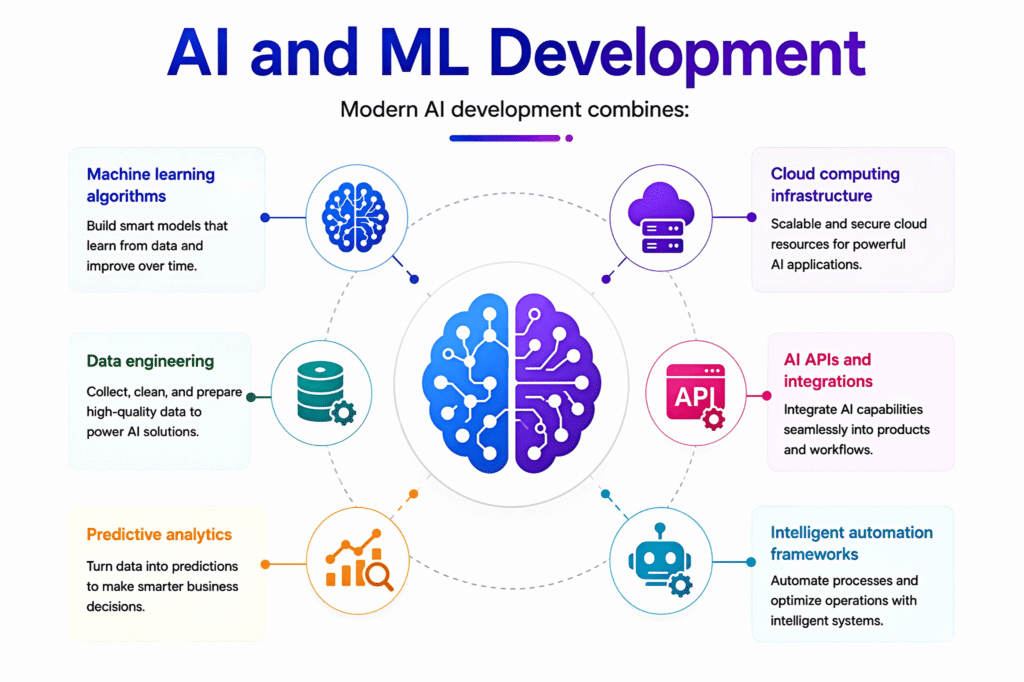
Modern AI development combines:
• Machine learning algorithms
• Cloud computing infrastructure
• Data engineering
• AI APIs and integrations
• Predictive analytics
• Intelligent automation frameworks
Businesses increasingly partner with an experienced AI & ML development company to build scalable AI systems tailored to operational goals and customer requirements.
What Are the 4 Types of AI?
AI technologies are generally categorized into four major types based on capability and intelligence levels.
Reactive Machines: Reactive AI systems respond to specific inputs without storing memories or learning from past interactions. Basic recommendation engines and rule-based automation systems often fall into this category.
Limited Memory AI: Limited memory AI systems learn from historical data to improve future predictions and decisions. Most modern AI-powered business applications operate within this category.
Examples include:
• Predictive analytics
• Autonomous systems
• AI recommendation engines
• Conversational AI platforms
Theory of Mind AI: Theory of Mind AI focuses on understanding emotions, intentions, and human behavior. Although still in research stages, this area may influence future customer engagement systems and robotics technologies.
Self-Aware AI: Self-aware AI represents hypothetical systems capable of consciousness and self-awareness. While widely discussed in AI theory, this level of AI has not yet been achieved.
What Are AI ML Services?
AI ML services include the design, development, deployment, and maintenance of intelligent software systems that automate workflows and improve business decision-making.
Modern AI and ML services commonly include:
• Custom AI software development
• Machine learning model development
• AI chatbot solutions
• Predictive analytics systems
• Natural language processing applications
• Computer vision solutions
• AI automation systems
• Recommendation engine development
• AI cloud integration
• Enterprise AI consulting
Businesses increasingly work with a custom ai development company to build industry-specific AI platforms rather than relying only on generic automation tools.
What’s the Main Difference Between AI and ML?
Artificial Intelligence is the broader concept focused on creating machines capable of performing tasks that normally require human intelligence. Machine Learning is a specialized branch of AI focused specifically on systems learning from data automatically.
In simple terms:
• AI focuses on intelligent behavior
• ML focuses on learning from data patterns
For example, AI powers conversational assistants, while machine learning improves those assistants by analyzing user interactions and behavioral trends.
What Does an AI ML Developer Do?
An AI ML developer builds, trains, tests, and deploys intelligent systems capable of automating business operations and processing large datasets efficiently.
Their responsibilities often include:
• Developing machine learning algorithms
• Training predictive models
• Optimizing AI systems
• Managing AI infrastructure
• Integrating AI APIs
• Building intelligent automation workflows
• Improving model accuracy and scalability
As AI adoption continues expanding, AI ML developers are becoming critical contributors to enterprise innovation, operational modernization, and AI trends shaping web development 2026.
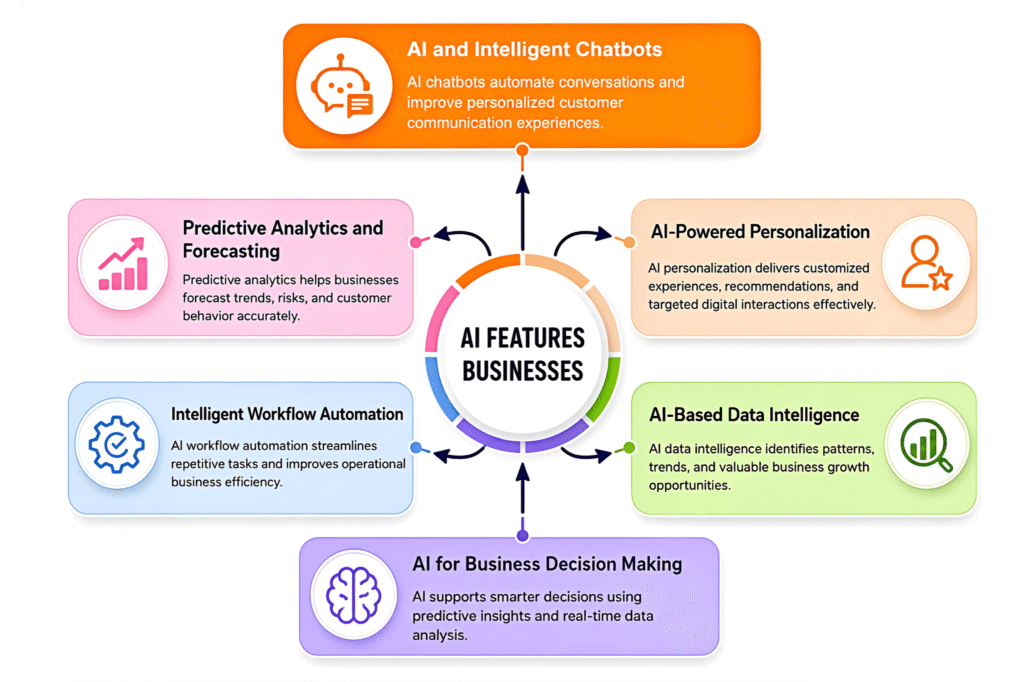
AI Features Businesses Now Demand Across All Industries
Businesses are increasingly searching for advanced AI capabilities that improve automation, personalization, operational efficiency, and customer engagement.
Conversational AI and Intelligent Chatbots
AI-powered chatbots have evolved far beyond scripted customer support systems. Modern conversational AI platforms understand user intent, analyze context, and deliver personalized interactions across websites, mobile apps, and messaging platforms.
Businesses now use conversational AI for:
• Customer support automation
• Lead qualification
• Appointment scheduling
• Ecommerce assistance
• Internal employee support
• Healthcare communication
Recent industry reports indicate that AI-powered customer service systems can reduce support response times significantly while improving customer satisfaction levels.
Predictive Analytics and Forecasting
Predictive analytics has become one of the most valuable enterprise AI applications. Businesses use predictive systems to forecast customer behavior, operational risks, inventory demand, and sales trends.
Industries actively using predictive analytics include:
• Ecommerce
• Healthcare
• Finance
• Logistics
• Retail
• Manufacturing
Organizations implementing predictive analytics often improve operational planning and business forecasting accuracy substantially.
AI-Powered Personalization
Consumers increasingly expect personalized digital experiences. AI systems help businesses deliver tailored product recommendations, content suggestions, targeted marketing campaigns, and customized communication strategies.
AI-driven personalization is now widely used across:
• Streaming platforms
• Ecommerce systems
• EdTech applications
• Healthcare platforms
• Financial services
• Travel technology
Market research suggests that businesses using AI personalization strategies often experience stronger customer engagement and higher conversion performance.
Intelligent Workflow Automation
AI-powered workflow automation is helping organizations reduce repetitive operational tasks while improving speed and consistency.
Popular AI workflow automation use cases include:
• Invoice processing
• CRM automation
• HR onboarding
• Customer support ticket routing
• Compliance monitoring
• Document verification
Many enterprises are now redesigning operational structures around AI-driven automation rather than treating AI as an additional support layer.
AI-Based Data Intelligence
Organizations generate massive amounts of customer and operational data daily. AI-powered analytics systems help identify trends, anomalies, behavioral patterns, and business opportunities much faster than traditional reporting methods.
AI-based business intelligence improves:
• Strategic planning
• Customer targeting
• Revenue forecasting
• Operational visibility
• Market analysis
• Performance optimization
Why Businesses Prefer Custom AI Development Companies
Many organizations prefer working with a custom AI development company instead of relying only on prebuilt AI software products.
Industry-Specific AI Solutions
Different industries require different operational workflows. A healthcare provider needs different AI capabilities compared to a logistics company or ecommerce platform.
Custom AI development allows businesses to create tailored systems aligned with operational goals and industry-specific challenges.
Better Scalability and Integration
Custom AI systems integrate more effectively with existing business infrastructure including CRMs, ERPs, cloud environments, mobile applications, and enterprise platforms.
This supports stronger long-term scalability and operational consistency.
Greater Data Security and Control
Businesses handling sensitive customer or operational data often prefer custom AI environments because they provide stronger compliance control, infrastructure flexibility, and data governance capabilities. Sensation Software Solutions helps enterprises build secure AI systems for healthcare, finance, insurance, and enterprise environments.
Comparison Between Traditional Software and AI-Powered Business Systems
Feature
Traditional Software Systems
AI-Powered Business Systems
Automation Capability
Rule-based automation
Intelligent adaptive automation
Data Processing
Manual analysis dependent
Real-time predictive analysis
Customer Personalization
Limited
Advanced AI-driven personalization
Workflow Optimization
Static workflows
Self-improving operational systems
Decision Support
Basic reporting
Predictive recommendations
Scalability
Limited flexibility
Highly scalable intelligent systems
User Experience
Standard interactions
Context-aware experiences
Operational Efficiency
Moderate
High automation efficiency
Businesses implementing AI-driven systems are increasingly achieving stronger scalability, faster decision-making, and improved customer engagement compared to traditional software environments.
Future of AI and ML Development Services
AI adoption is expected to continue accelerating as businesses increasingly invest in intelligent automation, predictive intelligence, and enterprise AI infrastructure.
Some major trends shaping the future of AI include:
• AI copilots for enterprises
• Autonomous workflow systems
• Generative AI integration
• AI-driven cybersecurity
• Hyper-personalized digital experiences
• Voice-enabled enterprise platforms
• Multimodal AI systems
• AI-powered search ecosystems
Industry forecasts suggest that AI-powered operations will continue transforming healthcare, finance, retail, manufacturing, logistics, education, and enterprise software ecosystems over the next decade. Contact us today to explore future-ready AI solutions for your business growth.
Organizations exploring enterprise-grade artificial intelligence solutions can also learn more about advanced AI & Machine Learning Development Services designed to support intelligent automation, predictive analytics, and scalable AI-powered business innovation.
Education CRM software is designed to support the complete student journey. From the first inquiry to enrollment and post-admission engagement, every stage is connected within a single system.
Unlike traditional buyers, students rarely make quick decisions. They often compare institutions, ask multiple questions, and take time before applying. Some may even pause their decision-making process and return weeks later.
Admissions Workflow Support
Admissions workflows involve more than just “open” and “closed” stages. There are document checks, eligibility confirmations, fee discussions, seat availability concerns, and academic approvals. An education CRM solution includes these workflows by default, so teams can move students through each stage without confusion. Generic CRMs usually require heavy customization to replicate this, and even then, the process often feels forced or incomplete.
Parent Student Communication Handling
In education, communication is rarely one-to-one. Parents, guardians, and sometimes sponsors are involved in the decision-making process. Education CRM software allows institutions to manage multiple contacts linked to a single student profile. This ensures that updates reach the right people at the right time. Generic CRMs usually treat each contact as an individual buyer, which can result in fragmented communication and missing context.
Counselor Management Structure
Education CRM software is built to support counselors rather than sales representatives. It tracks counselor assignments, follow-ups, workloads, and response times in a way that reflects academic counseling rather than sales pressure. This helps institutions ensure fair distribution of inquiries and consistent follow-ups. Generic CRMs focus on deal ownership and sales quotas, which don’t translate well to counseling environments.
Academic Reporting and Insights
Education-focused reporting looks very different from sales reporting. Institutions need to understand which programs attract the most interest, where students drop off in the admission process, how long decisions take, and which counselors need support. An education CRM solution provides these insights in a usable, institution-ready format. Generic CRMs mainly report on revenue forecasts and pipeline velocity, which offer limited value in academic decision-making.
Compliance and Data Sensitivity
Educational institutions handle sensitive student information that must be protected carefully. Education CRM software is designed with this responsibility in mind, offering role-based access, audit trails, and controlled data visibility. This ensures that staff members only see the information relevant to their role. Generic CRMs can be secured, but compliance is not their primary design focus, making them riskier if not managed carefully.
Reduced Customization Dependency
One common issue with generic CRMs is the need for extensive customization to fit education workflows. Over time, this creates dependency on technical teams and increases maintenance costs. Education CRM software already understands academic structures, making it an ideal solution for schools, colleges, and coaching institutes that need stability rather than constant configuration.
Admissions teams are more likely to use a system that feels intuitive and aligned with their daily tasks. Education CRM software mirrors how counselors already work, which leads to higher adoption and better data quality through effective student management. Generic CRMs often feel foreign to academic staff, lacking proper student management controls and causing teams to fall back on spreadsheets or personal notes, which defeats the purpose of having a CRM at all.
Scalability Without Operational Chaos Education CRM Software
As institutions grow, they face higher inquiry volumes, more programs, and larger counseling teams. Education CRM software scales without disrupting existing workflows, maintaining structure even as complexity increases. Generic CRMs can scale technically, but without proper academic logic, they often create confusion as the institution grows.
Cost vs Long-Term Value
While generic CRMs may appear cheaper initially, the long-term costs of customization, training, and inefficiency often outweigh the savings. Education CRM software delivers better value over time because it reduces manual work, improves follow-up consistency, and supports admissions teams more effectively. Institutions end up saving time, effort, and resources in the long run.
Why This Difference Matters in Practice Education CRM Software
Choosing between a generic CRM and education CRM software isn’t just a technical decision. It directly affects how smoothly admissions teams operate, how effectively lead management is handled, how students experience the institution, and how leadership makes decisions. A system built for education reduces friction and supports sustainable growth.
As institutions grow, they face higher inquiry volumes, more programs, and larger counseling teams. Education CRM software scales without disrupting existing workflows, maintaining structure even as complexity increases. Generic CRMs can scale technically, but without proper academic logic, they often create confusion as the institution grows.
Education CRM Software Final Thought
Education institutions don’t need to force their processes into a sales-oriented system. They need tools that respect how education actually works.
Sensation CRM is designed specifically for academic environments, supporting admissions workflows, counselor operations, and institutional reporting without unnecessary complexity. For schools, colleges, and coaching institutes that value clarity, accountability, and long-term scalability, using an education-focused CRM makes everyday work simpler and more effective.
Education institutions don’t need to force their processes into a sales-oriented system. They need tools that respect how education actually works.
As institutions grow, they face higher inquiry volumes, more programs, and larger counseling teams. Education CRM software scales without disrupting existing workflows, maintaining structure even as complexity increases. Generic CRMs can scale technically, but without proper academic logic, they often create confusion as the institution grows.
Sensation CRM is designed specifically for academic environments, supporting admissions workflows, counselor operations, and institutional reporting without unnecessary complexity. For schools, colleges, and coaching institutes that value clarity, accountability, and long-term scalability, using an education-focused CRM makes everyday work simpler and more effective.
Education institutions don’t need to force their processes into a sales-oriented system. They need tools that respect how education actually works.
Sensation CRM is designed specifically for academic environments, supporting admissions workflows, counselor operations, and institutional reporting without unnecessary complexity. For schools, colleges, and coaching institutes that value clarity, accountability, and long-term scalability, using an education-focused CRM makes everyday work simpler and more effective.
As institutions grow, they face higher inquiry volumes, more programs, and larger counseling teams. Education CRM software scales without disrupting existing workflows, maintaining structure even as complexity increases. Generic CRMs can scale technically, but without proper academic logic, they often create confusion as the institution grows.